
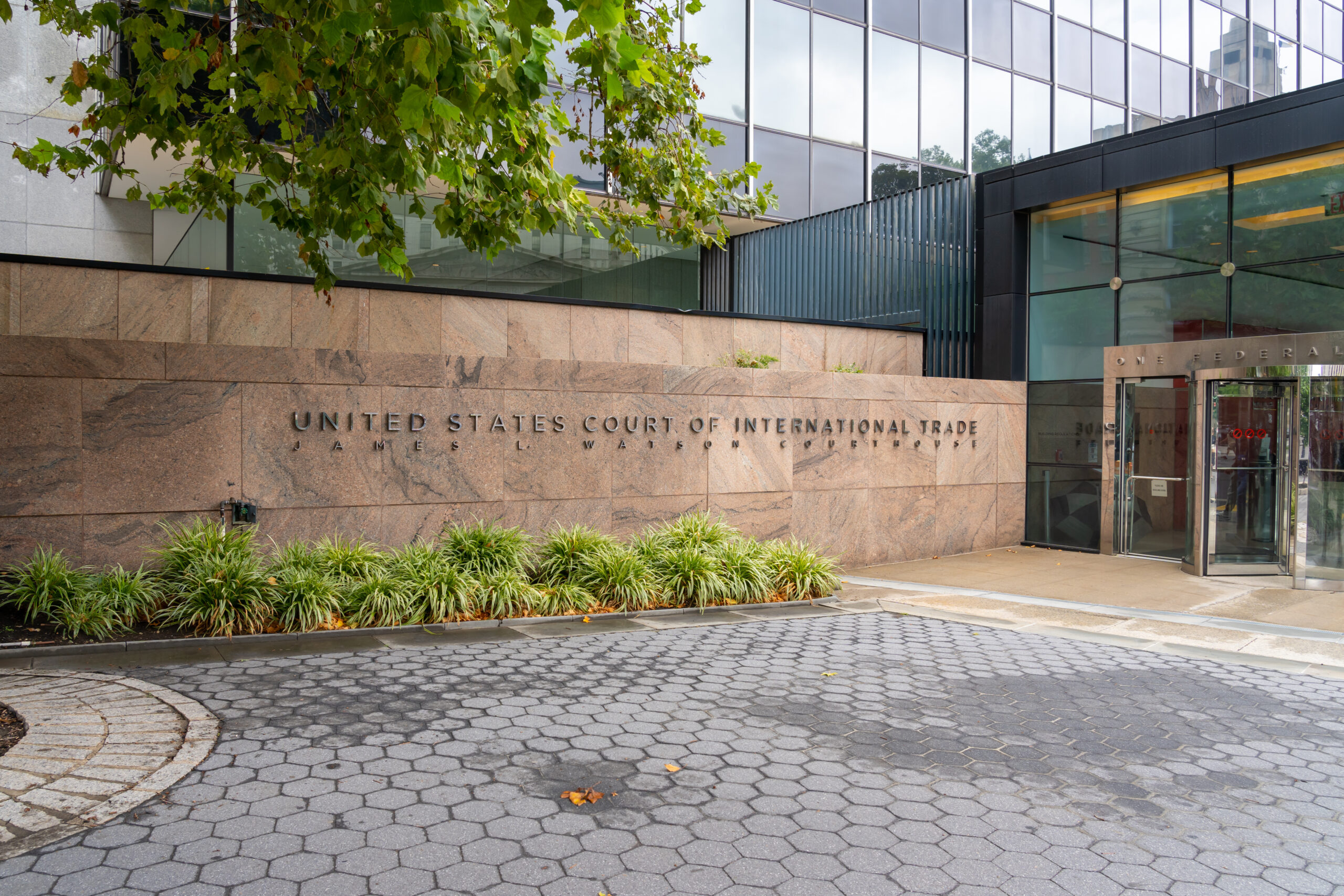
A new lawsuit has been filed at the U.S. Court of International Trade (“CIT”), challenging how U.S. Customs and Border Protection (“CBP”) has been valuing and applying Section 232 tariffs on imported steel and aluminum derivative products.
Specifically, Express Fasteners, Ltd. (“Express” or “plaintiff”) of Illinois commenced this latest action arguing that its imports of screws and fasteners were unlawfully assessed Section 232 steel duties by CBP. The plaintiff contends that while longstanding public guidance – via Cargo Systems Messaging Service (“CSMS”), FAQs, and Customs Rulings – limits the 232 tariffs to the value of the steel content of the product, CBP recently began applying the 50% duty to the entire value of imported screws and fasteners, including machining, fabrication, factory overhead, and other non‑steel costs. According to the complaint, this change was never published, subject to public notice or comment and rulemaking procedures and therefore represents an unlawful and arbitrary departure from established agency guidance. Express is asking the Court to order CBP to reliquidate the entries using a steel content only method and to order CBP to return all excess duties collected.
At the center of the complaint is an internal, unpublished memorandum issued by CBP’s Base Metals Center of Excellence and Expertise (“CEE”) in December 2025. Express alleges this memo purports to establish rules for the valuation of imported merchandise by effectively declaring that manufacturing, machining, overhead, and profit are all “steel content,” resulting in drastically inflated duties. Because such a memo establishes rules of general applicability, Express contends it must be issued through proper notice and comment rulemaking procedures – something CBP did not do.
Express brings four distinct legal counts, highlighting CBP’s assessment of Section 232 steel tariffs on the entire value of the imported steel products as procedurally defective, substantively unlawful, and inconsistent with statutory requirements.
Count I – Unlawful Rulemaking under the Administrative Procedure Act (“APA”)
Express argues that the CEE Memo effectively creates new, generally applicable valuation rules without going through the notice and comment rulemaking process provided for under the APA. Because CBP never published this policy as a regulation, the memo and any liquidations based on it should be deemed invalid.
Count II – Improper Modification of Existing CSMS, FAQs and CBP Rulings
Express contends that CBP’s new approach contradicts previously published CSMS guidance, FAQs, and Customs rulings, all of which limited Section 232 duties to the value of steel content only and not further machining or manufacturing performed upon that steel product by the finished goods vendor. Because CBP has not attempted to modify or revoke these, the CEE memo is deemed to have been issued without the procedures required by law and must be declared unlawful and set aside.
Count III – Use of Prohibited Valuation Methods in Violation of the APA
Express asserts that applying 50% duties to the full value of screws and fasteners relies on valuation methods expressly barred by Section 402(f)(2) of the Tariff Act of 1930 (19 U.S.C. 1401a(f)(2) – namely, using the higher of two alternative values and relying on arbitrary or fictitious values. This, Express argues, renders CBP’s appraisement arbitrary and capricious and therefore subject to being set aside under the APA.
Count IV – Violation of the Paperwork Reduction Act
Finally, Express argues that CBP’s demand for additional “non-steel content” reporting constitutes a new information collection requirement for the purposes of the Paperwork Reduction Act. Because neither the Request for Information (CF‑29) issued by CBP to the importer nor the CEE memo included a valid OMB control number, plaintiff contends that CBP had no authority to impose that requirement in the first place. Accordingly, any additional duties collected based on this unauthorized demand function as an unenforceable penalty under the Paperwork Reduction Act
Ultimately, in its request for relief, Express asks the Court to declare CBP’s valuation approach unlawful, remand the entries for reliquidation based on steel content only (and not further work performed upon the steel content), and order CBP to refund the excess Section 232 duties paid, plus interest. Express also seeks any additional relief the Court deems appropriate, including attorney’s fees and costs.
The Husch Blackwell Trade Team is following this case closely and will provide updates on developments related to this case, as well as any further official guidance from CBP concerning Section 232 tariffs.