China

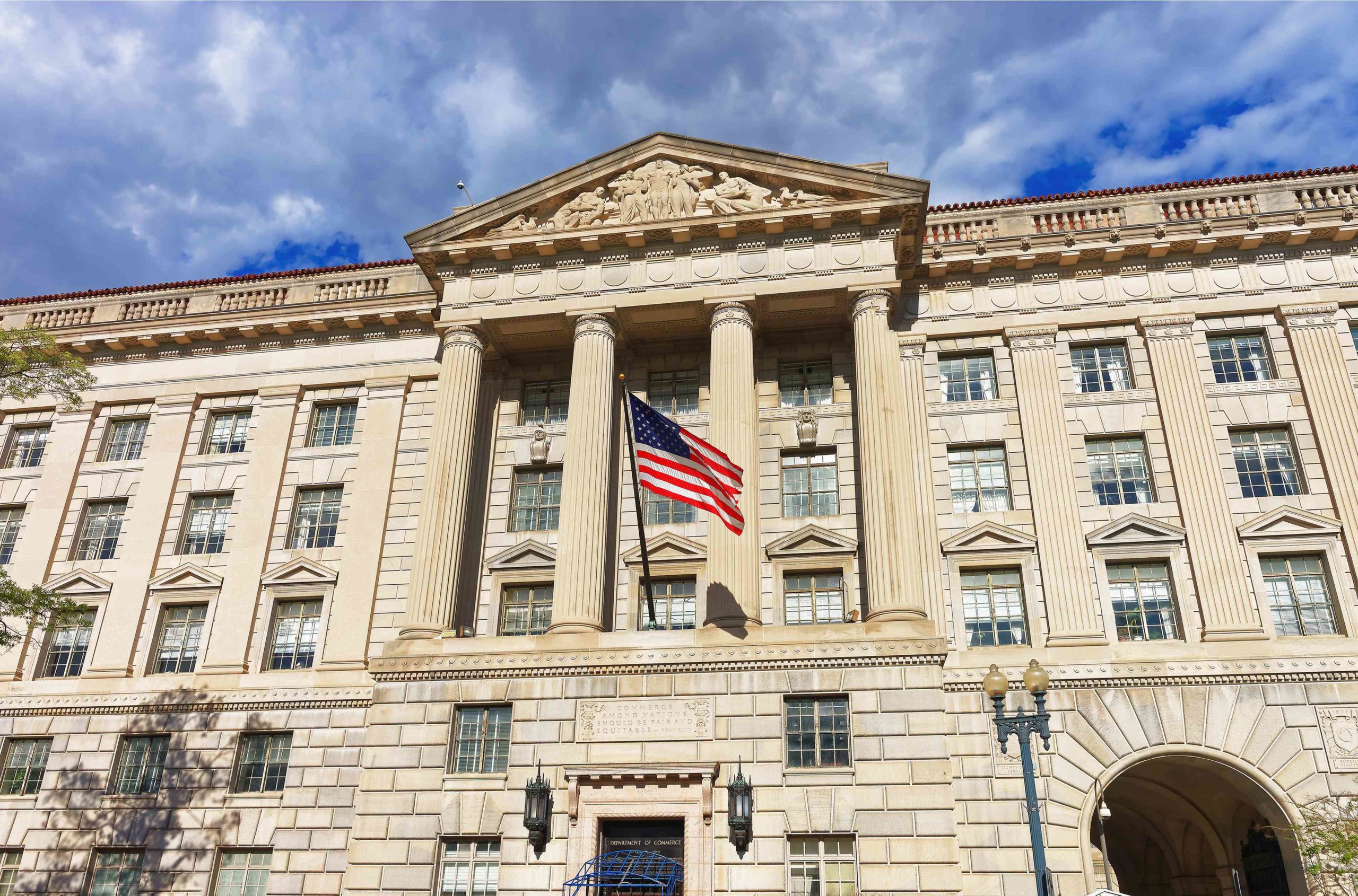
Earlier this month, the US Government updated its ongoing response to what the Department of Commerce (“Commerce”) described as “Beijing’s campaign of repression, mass detention, and high-technology surveillance against Uyghurs, Kazakhs, and members of other Muslim minority groups in the Xinjiang Uyghur Autonomous Regions of China (“XUAR”), where the [People’s Republic of China] continues to

In Husch Blackwell’s June 2021 Trade Law Newsletter, you’ll learn about the following updates in international trade and supply chain law:

  • Biden Administration took recent actions related to products from China’s Xinjiang region
  • US-EU announced a cooperative framework suspending Large Civil Aircraft tariffs and addressing non-market practices in the civil aircraft sector
  • White House

The Biden Administration has taken new actions related to forced labor in the Xinjiang region that may affect the supply for material critical for solar panels: U.S. Customs and Border Protection (CBP) issued a Withhold Release Order (WRO), the Department of Commerce (Commerce) updated its Entity List, and the Department of Labor (Labor) updated its “List of Goods Produced by Child Labor or Forced Labor.”  These updates are part of an increased emphasis on both forced labor issues and a crackdown on goods from China’s Xinjiang province, and come on the heels of the G7 Summit that was held in mid-June.  The White House indicated that the Administration’s actions are a “translation” of the commitments made at the G7 denouncing forced labor in the Xinjiang region.

President Biden issued Executive Order (“EO”) 14017 titled “America’s Supply Chains” on February 24, 2021, ordering 100-day and 1-year reviews of certain critical supply chains.  On June 8, 2021, a final report was published, officially marking the end of the 100-day reviews under EO 14017.  The reviews assessed risks posed to the following critical supply

Secretary of Commerce Gina M. Raimondo recently announced that the Department of Commerce (“Commerce”) had served subpoenas on multiple Chinese companies that provide information and communications technology and services (“ICTS”) in the United States pursuant to Executive Order 13873 (“EO 13873”).  While it is unknown which companies were served or how many, Commerce’s recent action

The merging of Hong Kong with China with respect to Hong Kong’s treatment under the Export Administration Regulations (“EAR”) is now reflected in the Department of Commerce’s Bureau of Industry and Security’s Hong Kong recordkeeping guidance.  On February 19, 2021, BIS updated its Hong Kong recordkeeping FAQs to make that guidance consistent with the final rule BIS issued on December 23, 2020 implementing Executive Order 13936 (the “E.O.”).  The E.O. was signed in the wake of U.S. objections to Chinese government national security legislation imposed on Hong Kong in 2020, which outlaws any act of “secession,” “terrorism,” or “collusion” with a foreign power.

On February 2, 2021, the U.S. Department of Commerce (“Commerce”) announced the initiation of antidumping (“AD”) and countervailing duty (“CVD”) investigations on pentafluoroethane (R-125) from China. The petitioner in this case is Honeywell International, Inc. See our previous post summarizing the petition for details on the scope of the investigations and for lists of the

On January 13, 2021, U.S. Customs and Border Protection (“CBP”) issued a region-wide Withhold Release Order (“WRO”) against cotton products and tomato products originating from Xinjiang Uyghur Autonomous Region (“Xinjiang”) in China. The WRO also applies to all products made in whole or in part from Xinjiang cotton and tomatoes, regardless of where those downstream