
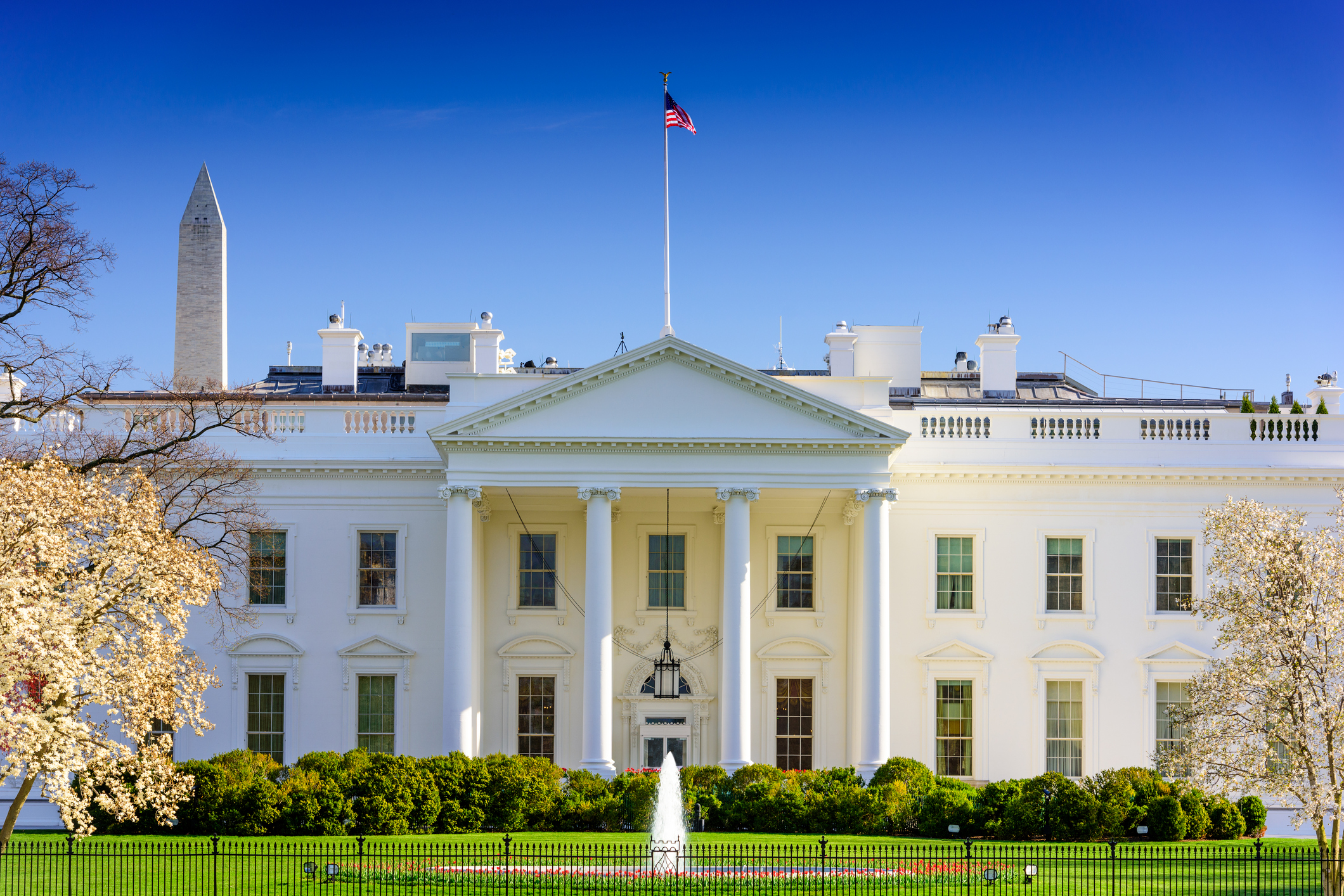
On Friday February 20, 2026, just a few hours after the Supreme Court struck down the validity of the International Emergency Economic Powers Act (“IEEPA”) tariffs that have been in place since February 2025, the White House issued multiple executive orders (“EO”).
The first EO, entitled “Ending Certain Tariff Actions” (“IEEPA tariffs”), pronounced the official end of the IEEPA tariffs in response to the Supreme Court decision but included a caveat that the suspension of duty-free de minimis entries will remain in place. The EO directed an end to the IEEPA tariffs “as soon as practicable,” meaning there is still no fixed date as to when U.S. Customs and Border Protection (“CBP”) will cease collecting the tariffs.
The second EO, entitled, “Imposing a Temporary Import Surcharge,” institute a global 10% tariff pursuant to Section 122 of the Trade Act of 1974 (“Section 122”) against all imports from all countries.
The third EO, entitled “Continuing the Suspension of Duty-Free De Minimis Treatment for All Countries,” stated that the suspension of duty-free de minimis treatment for all countries continues to be in effect. The third EO was necessary in order to transfer the policy from the prior EO under IEEPA to the new EO instituting 10% Section 122 tariffs.
Effective Dates of Executive Orders
Scope:
- The IEEPA tariffs have all been ordered to cease. This includes the IEEPA Trafficking (also known as “IEEPA Fentanyl” tariffs) Tariffs on Canada, Mexico, and China; the IEEPA Reciprocal Tariffs; and the additional escalating (or “secondary”) tariffs on Brazil, India, Cuba, and Iran.
- The EO states that it preserves “all other actions” taken under IEEPA “that do not impose ad valorem duties under IEEPA.” Effectively, this language indicates that other measures taken under IEEPA could occur in the future, but for the present, how or when that will be utilized is unknown.
- Section 122 Tariffs will replace the IEEPA tariffs effective February 24, 2026, (with an in-transit exception) at a rate of 10% on all goods imported into the United States from all countries for a period of 150 days until July 24, 2026.
- Goods entered into a foreign trade zone will be required to be entered as privileged foreign status.
- Refunds are not automatic unless CBP or the Courts issue guidance.
Exemptions:
- The Section 122 tariffs will not apply to products detailed in Annex I and Annex II to the proclamation. The list of goods exempt from Section 122 tariffs mirrors the exemptions that were already in effect for IEEPA tariffs.
- An “in transit” exemption for goods “loaded onto a vessel at the port of loading and in transit on the final mode of transit prior to entry” into the U.S. before 12:01 a.m. on February 24, 2026, and entered before 12:01 a.m. February 28, 2026.” Such goods are exempt from Section 122 tariffs.
- The list of product exemptions identified in Annexes I and II include:
- certain critical minerals
- energy and energy products
- natural resources and fertilizers that cannot be grown, mined, or otherwise produced in the United States or in sufficient quantities
- certain agricultural products
- pharmaceuticals and pharmaceutical ingredients
- certain electronics
- passenger vehicles, certain light trucks, certain medium- and heavy-duty vehicles, buses, and certain parts
- certain aerospace products
- textile and apparel articles that are entered free of duty-free under DR-CAFTA
Effective Dates:
- The EO ceasing the IEEPA tariffs takes immediate effect and the agencies (primarily CBP) are to take action to “as soon as practicable.” However, unless and until CBP issues a CSMS message, importers will have to continue to post IEEPA tariffs.
- Until CBP issues a specific message instructing importers and brokers to stop paying duties, any importer that refuses to pay duties may be subject to liquidated damage claims, and CBP has the authority to deny entry.
- Any IEEPA tariffs paid during this interim period would have to go follow same process as all other IEEPA tariffs paid for importers to be able to receive refunds.
Stacking Guidance:
Section 122 tariffs will stack on top of other duties and tariffs, which means that goods will also be subject to any of the following applicable duties/tariffs:
- Normal MFN (Column 1);
- Section 301 tariffs (if applicable);
- Antidumping and Countervailing Duties (if applicable); and
- Section 122 tariffs will not generally stack on top of current Section 232 tariffs. However, for Section 232 steel, aluminum, and copper tariffs where metal content valuation and non-metal content valuation must be determined, Section 122 tariffs will apply to the non-metal content.
Applicable HTSUS Numbers
Imported goods subject to the Section 122 tariffs will be classified under new Harmonized Tariff Schedule of the United States (“HTSUS”) Subheading 9903.03.01. New subheadings 9903.03.02 through 9903.03.11 will be used to declare various exemptions from the tariffs.
Next Steps for Importers
- Importers will continue to have to post and pay IEEPA tariffs until CBP issues specific guidance ceasing collection.
- Section 122 tariffs will have to be posted starting at 12:01am on February 24, 2026.
- The process by which refunds will be issued after the Supreme Court ruling is still not announced.
- Importers have multiple options on how to handle refunds and currently each option must be tailored to the facts and circumstances of each individual importer:
- Importers should continue to monitor entries and the liquidation dates by running ACE reports. Importers can consider filing protests if entries are approaching the 180 day post-liquidation deadline. We continue to caution that the Court of International Trade (“CIT”) has indicated that protests are not required, and importers should consult with counsel before making decision on whether protests are necessary. Protests could be an option utilized by CBP to issue refunds of IEEPA tariffs, but that is currently unclear.
- Importers can consider filing complaints at the CIT. There are differing opinions as to whether the relief that is granted by the CIT is applicable only on a plaintiff-specific basis. The CIT did not address that in either its May 2025 decision or its December 15, 2025, decision related to IEEPA tariffs. Currently, importers should be aware of their options, but the statute of limitations to file an appeal does not expire until either of (a) two years after the institution of IEEPA tariffs; or (b) two years after the date of entry of the specific entry that was subject to IEEPA tariffs.
- Importers can determine whether it is appropriate to file post-summary corrections (“PSCs”), but it is important to note that only brokers and self-filers can file PSCs, and if any legal arguments need to be submitted, the PSC is not a viable option.
- Importers should ensure that importer-specific information is updated in Automated Clearing House (“ ACH”) as all refunds will be issued through the ACH portal.
We encourage all clients to be patient as this is an evolving situation and Husch Blackwell’s International Trade and Supply Chain team will continue to monitor and post updates as they become available.