
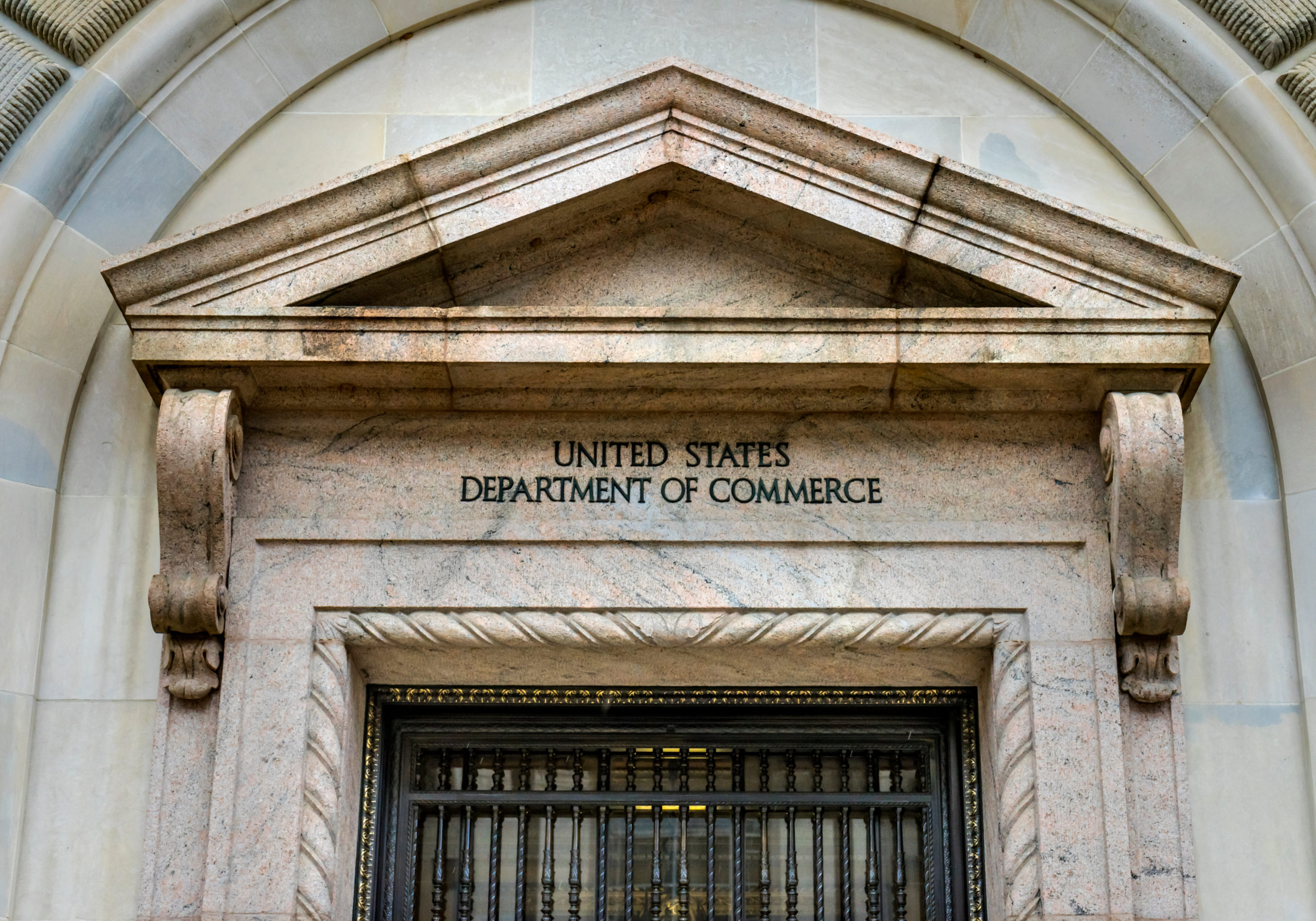
On April 23, 2026, the U.S. Department of Commerce (“Commerce”) published new procedures in the Federal Register for certain steel and aluminum producers to obtain tariff adjustments pursuant to Presidential Proclamation 10984. Proclamation 10984 authorized the Secretary of Commerce to reduce certain Section 232 metals tariffs implemented under Proclamations 9704 and 9705, as amended, for certain steel and aluminum producers in Canada and Mexico.
The notice establishes procedures for the submission and review of documentation needed to qualify for a reduction in tariffs and sets forth the following criteria:
Eligibility:
- “Qualified Companies”: Only applicants that produce steel or aluminum in Canada or Mexico are eligible and applicants must directly or indirectly (through incorporation into parts) supply steel or aluminum to U.S. producers of automobiles or medium-heavy duty vehicles (“MHDV”).
- “Qualifying Commitments”: Only new production commitments from Qualified Companies which will expand U.S. steel and aluminum production capacity automobiles, MHDVs, and parts for same, are eligible for consideration.
- “Qualifying Imports”: Only imports of steel and aluminum that qualify under the U.S. Mexico and Canada Free Trade Agreement (“USMCA”) and that were melted and poured or smelted and cast in Mexico or Canada are eligible. Tariff adjustments will be based on quantities of Qualifying Imports equal to the projected annual new production capacity as determined by Commerce. The adjustment will also be limited in time.
Documentation
The submissions should include documentation certified by an applicant’s CFO, General Counsel, or equivalent-level senior officer and contain the following information:
- Company Description and Customer Base: An explanation of the applicant’s status as a Qualifying Company, including locations, volumes, and product types of existing production of steel or aluminum in Canada or Mexico and U.S. customers to whom the applicant suppliers (directly or indirectly) sell steel or aluminum.
- Project Proposal: An overview of the project proposal including background information, project objectives, location, progress, and explanation of engagement with local authorities on the project to reflect economic incentives and permitting.
- Project’s Production Capabilities: Applicants should also include the following information:
- Details on the kind of primary steel and/or primary aluminum that will be produced at the facility, including the applicable North American Industry Classification System (“NAICS”) code, the Harmonized Tariff Schedule of the United States (“HTSUS”) code that would apply to the product if it were imported into the United States, and a written description of the steel or aluminum product;
- The U.S. key product(s), automobiles, automobile parts, MHDVs, and MHDV parts, production capacity that will be supported, directly or indirectly, by the production resulting from the project;
- The projected annual primary steel or primary aluminum production capacity that will result from the project;
- A list of suppliers (or potential suppliers) of production equipment for the project, including contracts that have been entered into and quotes or estimates that have been provided by potential suppliers;
- A list of construction contractors (or potential contractors) that will be involved in executing the project, including contracts that have been entered into and quotes or estimates that have been provided by potential suppliers;
- A list of raw materials that will be needed to support production under the project, including known or expected suppliers and any contracts that have been entered into and quotes or estimates that have been provided by potential suppliers; and
- A narrative explanation of how the applicant will increase hiring to staff the new project.
- Milestones: The applicant must include projected targets for each of the below milestones that the applicant commits to meeting:
- Purchase of land;
- Completion of facility design;
- Hiring construction team or construction contractors;
- Construction start date;
- Purchase of equipment;
- Delivery and installation of equipment; and
- Completion of construction and production first heat.
The below are optional milestones which applicants can elect to include in the application:
- Award of significant construction contract(s);
- Award of significant engineering contract(s);
- Permitting application submission;
- Permitting award;
- Finalizing financing agreements;
- Hiring engineers; and
- Equipment certification.
- Project Management Plan: This plan should detail how key aspects of the project will be managed including hiring decisions, engineering, equipment supply, and other relevant activities to complete the project. It should also include estimated construction costs, engineering, and equipment necessary and any other significant costs.
- Commitment to Provide Quarterly Reports: Applicants must include a commitment to providing quarterly reports to Commerce detailing the progress toward milestones and costs-to-date incurred.
- Statement of Understanding: Applicants must attest that substantially meeting the milestones is necessary for continued eligibility for the tariff adjustment and that liquidation or reliquidation of entries with outstanding tariffs on prior entries may result. Tariff adjustments may be paused by Commerce on a quarterly basis should Commerce determine that the applicant is not substantially meeting milestones. Moreover, failure to provide requested information and significant delays that are within the applicant’s control and that threaten a project’s timely completion may result in a determination by Commerce that the applicant has failed to substantially meet its Qualifying Commitment, resulting in termination of eligibility and a requirement that the Qualifying Company take all necessary action to pay duties that would otherwise have been owed on previous entries of Qualifying Imports. The applicant is required to provide information requested by Commerce and to provide Commerce with access to information needed to verify the accuracy of the application and to ensure compliance with Qualifying Commitments. Failure to do so may be treated as a failure to substantially meet Qualifying Commitments and may result in Commerce directing U.S. Customs and Border Protection (“CBP”) to reliquidate entries at the duty rate that would apply without any tariff adjustment.
- Name of Importer of Record: The Importer of Record (“IOR”) responsible for importing the steel or aluminum under the tariff adjustment. The applicant may only designate a single representative.
Review and Approval
After the submission process, Commerce will then review the application for completeness, commercial practicalities, and compliance with the procedures. If approved, Commerce will then notify CBP of the decision, the effective date, the quantity eligible, and the authorized importer.
Documentation to Provide After Approval
After approval, the Qualified Company must provide the following on a quarterly basis:
- Letter certified by the CFO, General Counsel, or equivalent senior officer, summarizing the total shipments, volume, and value of Qualified Imports, entered during the quarter and location of the facilities producing the Qualified Imports claiming tariff adjustment.
- An Excel spreadsheet and/or certified .pdf with detailed information on all shipments of Qualified Imports claiming tariff adjustment. For steel, each listed shipment of Qualified Imports should include the country of origin, volume, value, HTSUS classification, and entry number with accompanying mill test certificates which state the country and facility of melt and pour and for each listed heat number. For aluminum, each listed shipment of Qualified Imports should include the country and facility of smelt, the country and facility of most recent cast, the country of origin, the value and volume of the article of aluminum, products, HTSUS classification, and a customs entry number for the import.
As this is an evolving situation, the Husch Blackwell International Trade and Supply Chain team will continue to monitor and provide updates as they become available. If you have company specific questions or concerns please contact your Husch Blackwell attorney.