Transportation

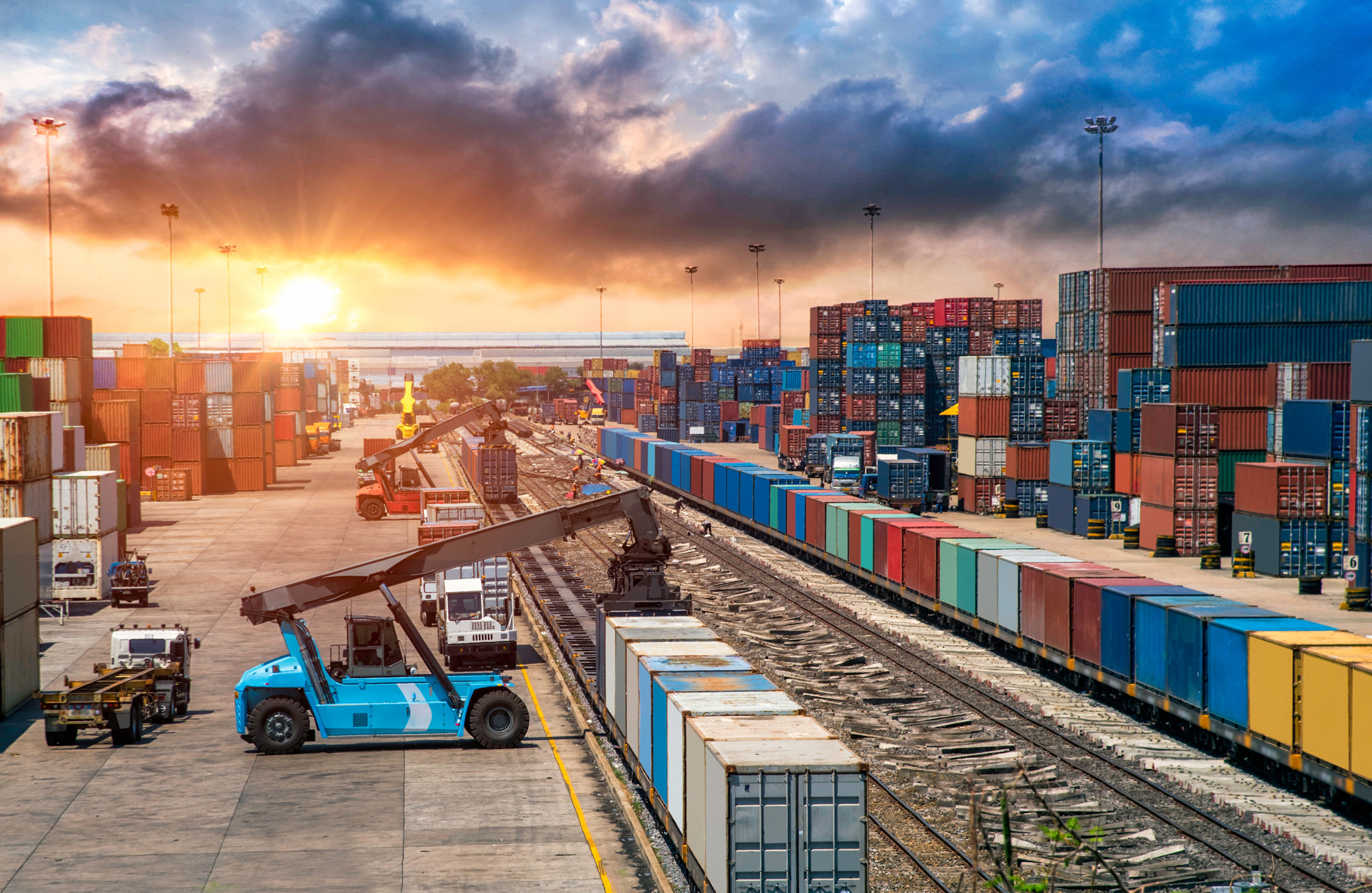
As a result of the contagious ocean carrier saga, recently the subject of a Presidential Executive Order dealing with anti-competitive developments in ocean shipping, the contagion has now fixated on rail ramps where intermodal deliveries of ocean freight moves has come to a virtual standstill. At least that is the case at Lot W.

A

The below e-mail recently received by the author paints the picture we are seeing a thousand fold in the current ocean shipping marketplace in the inbound/outbound Asia trade lanes which underscores the serious disconnect currently between ocean common carriers and shippers in these U.S trade lanes:

Carlos:

We are seeing examples where there was

According to media reports, a massive 400-meter container ship operated by Evergreen Marine Corp. in Taiwan, the Ever Given, became stuck in the Suez Canal after apparently running aground due to high winds from a sandstorm. As a result, potentially hundreds of ships cannot pass on either side of the Suez Canal

The major thrust of this post is to underscore certain micro trends which have emerged in the ocean transport industry in the recent past, which are not expected to transcend into macro territory, but will be present for a good while, and need attention since they can result in substantial damages/losses to importers and exporters. Focusing on these can result in big dollar savings in the short and long run. These micro trends have surfaced as a result of a combination of events and developments such as unpredictable turns in the import trades from China/Asia to the United States; the export levels and trends of agricultural commodities from the U.S. to China; the prevalence of equipment unavailability to the shipping industry (both containers and chassis, and now, sometimes vessels).

On April 28, 2020, the Federal Maritime Commission (“Commission “or “FMC”) released the long-awaited interpretive rules in Docket No. 19-05 relating to how ocean common carriers may lawfully apply demurrage and detention charges to exporters, importers, and ocean transportation intermediaries, including Customs brokers in certain circumstances and still be compliant with the “reasonableness” requirement of 

What might not be so obvious in this COVID-19 environment, which we have grown to associate with shortages, is that counterintuitively there are issues beginning to appear dealing with the opposite situation. The Journal of Commerce has reported that “[t]he container shipping industry is marshaling a response to signs of a building import backlog as some retailers and manufacturers fail to pick up containers because warehouses are full or closed due to not being deemed essential service providers responding to coronavirus disease 2019 (COVID-19).” This is a development with implications to all stakeholders in the supply chain and will have some impact on retailers/manufacturers, ocean carriers, ocean transportation intermediaries, and warehouses.

In the last year or so, it has become clearly evident to us that ocean carriers are treating European and other forwarders differently than how they deal with U.S. forwarders, creating a distinctly competitive disadvantage for U.S. ocean forwarders, NVOCCs and Customs brokers. The bottom line activity is that ocean carriers are creating beneficial sell rates to “forwarders”, usually in ocean carriers’ tariffs, for use exclusively by European forwarders located in certain locations in Europe and elsewhere (not the U.S.). We are using the term “forwarders” here in the U.S. sense. But for our narrative here, the European forwarder, located in Europe and other locations[1], will dispatch cargo from Europe based on lump sum rates formulated from the sell rates offered to them by the ocean carriers, but will not hold out as NVOCCs, nor issue house bills of lading. Many of these forwarders are neither licensed nor registered with the FMC as NVOCCs. In fact, U.S. forwarders under the current definition of “forwarders” could similarly issue lump sum rates under the current FMC regulations for export transport from the U.S. Unfortunately, the ocean carriers, probably sensitive to U.S. regulatory structures do not provide U.S. forwarders similarly competitive rate structures for exports from the U.S. or for inbound traffic controlled by U.S. consignees. But also, more egregiously, if a U.S. forwarder, who also may be an NVOCC/Customs broker, controls import cargo to be shipped to the U.S. on a “collect” basis, the U.S. Ocean Transportation Intermediary (“OTI”) may have to “purchase” a favorable rate from the unlicensed, unregistered forwarder in Europe who does have the benefit of the competitive rate, even though it may not be a licensed or registered NVOCC.  The question: Is this legal? After discussing this with FMC officials, the answer is, “Probably.”

Court of International Trade

Summary of Decisions

19-66

On June 3, 2019, in the ongoing case of determining whether or not Plaintiff Midwest Fastener’s zinc and nylon anchor products are considered to be nails, the CIT sustained the Department of Commerce’s final results of the redetermination pursuant to the Court Remand. The CIT concluded that Plaintiff’s zinc and nylon anchors do not function like nails and are considered a separate type of product from nails by the relevant industry. Commerce’s remand results were sustained and Plaintiff Midwest Fastener’s products were excluded from the scope.

19-69

On June 6, the CIT denied Plaintiffs Confederacion de Asociaciones Agricolas del Estado de Sinaloa, Consejo Agricola de Baja California, Asociacion Mexicana de Horticultura Protegida, Asociacion de Productores de Hortalizas del Yaqui y Mayo, and Sistem Producto Tomate (collectively, “Plaintiffs”) motion for a temporary restraining order (“TRO”) and preliminary injunction (“PI”) in the antidumping duty investigation of tomatoes from Mexico. The Court determined that the Plaintiffs had not met their burden to establish the likelihood of success on the merits and irreparable harm absent injunctive relief. They also had failed to establish if the hardships tip in favor of denying the Plaintiff’s motion. The Court also found the public interest to be neutral. For those reasons the CIT denied the plaintiff’s motions.

U.S. International Trade Commission

Section 701/731 Proceedings

Investigations
  • Certain Pasta from Italy and Turkey: On April 10, 2019, the ITC announced its determination that the revocation on certain pasta from Italy and Turkey would lead to the continuation or recurrence of material injury to an industry in the United States.
  • Cast Iron Soil Pipe from the People’s Republic of China: On April 12, 2019, the ITC announced its final determinations in the AD and CVD investigation that industries in the US would be materially injured by the importation of the subject merchandise.
  • Larges Diameter Welded Pipe from Canada, Greece, Korea, and Turkey: On April 19, 2019, the ITC announced its final determination that an industry in the United States is materially injured by the importation of the subject merchandise.
  • Steel Propane Cylinders from China and Thailand: On April 29, 2019, the ITC issued a revised schedule of the final Phase of the Countervailing Duty and Anti-Dumping Duty Investigations.
  • Certain Large Residential Washers from Korea and Mexico: On April 30, 2019, the ITC released its final determinations on whether or not the continuation of the subject merchandise from these countries would continue to cause material injury in the United States.