
On June 2, 2026, the United States Trade Representative (“USTR”) proposed tariffs under Section 301 of the Trade Act of 1974 (“Section 301”) on imports from 60 countries for their failure to enforce prohibitions related to forced labor. The USTR found that these failures are unreasonable and burden U.S. commerce. The proposed tariffs range from 10% to 12.5%, though they do contain several carveouts.
President Trump Reduces Section 232 Tariffs on Certain Agricultural, Mobile Industrial, and HVAC Equipment
On June 1, 2026, President Trump issued a proclamation reducing tariff rates on certain agricultural equipment, mobile industrial equipment and machinery, and heating, ventilation and air conditioning (“HVAC”) equipment under Section 232 of the Trade Expansion Act of 1962 (“Section 232”). In the same proclamation, President Trump also added aluminum lithographic plates and steel racks
USTR Initiates Section 301 Investigation on Vietnam’s Intellectual Property Practices

On May 29, 2026, the Office of the U.S. Trade Representative announced it initiated an investigation of Vietnam under Section 301 of the Trade Act of 1974 (“Section 301”) regarding the country’s intellectual property protection and enforcement.
The USTR had identified Vietnam as a “Priority Foreign Country” in its April 30, 2026 Special 301 Report
DOJ to Appeal CIT Order Requiring IEEPA Duty Refunds for Finally Liquidated Entries

On May 29, 2026, the U.S. Department of Justice (“DOJ”) indicated that it will appeal the U.S. Court of International Trade’s (“CIT”) universal injunction ordering U.S. Customs and Border Protection (“CBP”) to reliquidate final entries (entries more than 90 days past liquidation) and refund duties paid under the International Economic Emergency Powers Act (“IEEPA”) by
Supreme Court Expands Transportation Worker Exemption to Intrastate Drivers in Interstate Supply Chains

The Supreme Court’s unanimous May 28, 2026, decision in Flowers Foods, Inc. v. Brock significantly broadens the Federal Arbitration Act’s Section 1 transportation-worker exemption by holding that workers performing exclusively intrastate deliveries as part of a larger interstate supply chain qualify as “engaged in interstate commerce” and are therefore exempt from compelled arbitration—even when they
CIT Orders Customs to Explain Its Position on Issuing IEEPA Refunds for All Entries Regardless of Liquidation Status
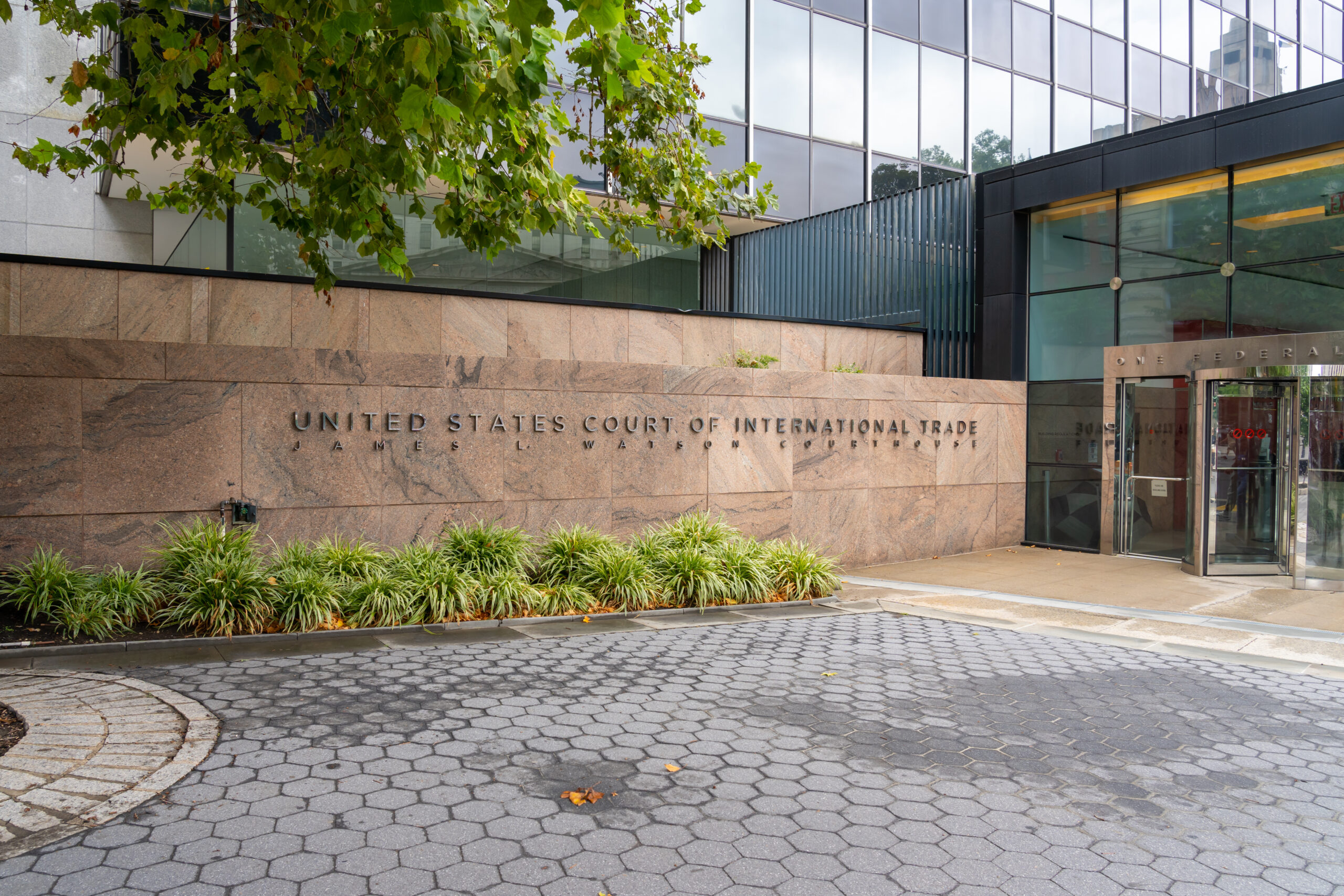
On May 27, 2026, following a closed-door conference in Euro-Notions Florida v. United States (CIT # 25-00595) (“Euro-Notions”), Judge Eaton issued two (2) orders which will require U.S. Customs and Border Protection (“CBP”) to explain the Government’s position on issuing IEEPA refunds for all entries, including those that have liquidated beyond the statutory reliquidation period
Imports of Taiwanese Aircraft Components Auto Parts and Wood Products Provided Relief from Section 232 Tariffs Under Taiwan Deal
On May 28, 2026, the U.S. Department of Commerce (“Commerce”) and the Office of the United States Trade Representative (“USTR”) announced reduced tariffs under Section 232 of the Trade Expansion Act of 1962, (“Section 232 tariffs”) for certain aircraft components, automobile parts and wood products from Taiwan effective May 1, 2026. The published Federal Register Notice comes
Court of International Trade Denies Government’s Motion to Stay Section 122 Ruling

On May 20, 2026, the U.S. Court of International Trade (CIT) denied the Government’s request to pause the CIT’s May 7 ruling during the appeals process. For now, Section 122 duties remain unlawful, and U.S. Customs & Border Protection (CBP) cannot collect Section 122 duties from plaintiffs Burlap & Barrel, Basic Fun, and the State of Washington.
New FMC Proposal Would Make It Easier for Industry to Shape Maritime Regulations

The Federal Maritime Commission’s May 13, 2026, Notice of Proposed Rulemaking would significantly revise and modernize its rulemaking procedures by simplifying existing requirements, aligning with current eRulemaking practices, and expanding opportunities for public participation—particularly by making it easier for stakeholders to petition for new or revised regulations.
The proposal signals a shift toward earlier and
IEEPA Tariffs: What Importers Need to Know About Refunds and the Emerging Wave of Consumer Class Actions

The Road to SCOTUS
Beginning in February 2025, President Trump imposed new tariffs on imported goods through a series of executive orders, relying on the International Emergency Economic Powers Act (IEEPA) as the claimed authority for imposing tariffs. In time, the new tariffs affected imported goods from nearly all countries. Legal challenges followed.
In V.O.S. Selections, Inc. v. United States, the Court of International Trade (CIT) enjoined the enforcement of the tariffs against the plaintiff, and the Federal Circuit affirmed. In Learning Resources, Inc. v. Trump, the U.S. District Court for the District of Columbia held that IEEPA does not authorize tariffs. The U.S. Supreme Court granted certiorari in both cases, and on February 20, 2026, issued its opinion holding that IEEPA does not authorize the President to impose tariffs. Two days later, U.S. Customs and Border Protection (CBP) announced that it would no longer collect IEEPA tariffs effective February 24, 2026.