
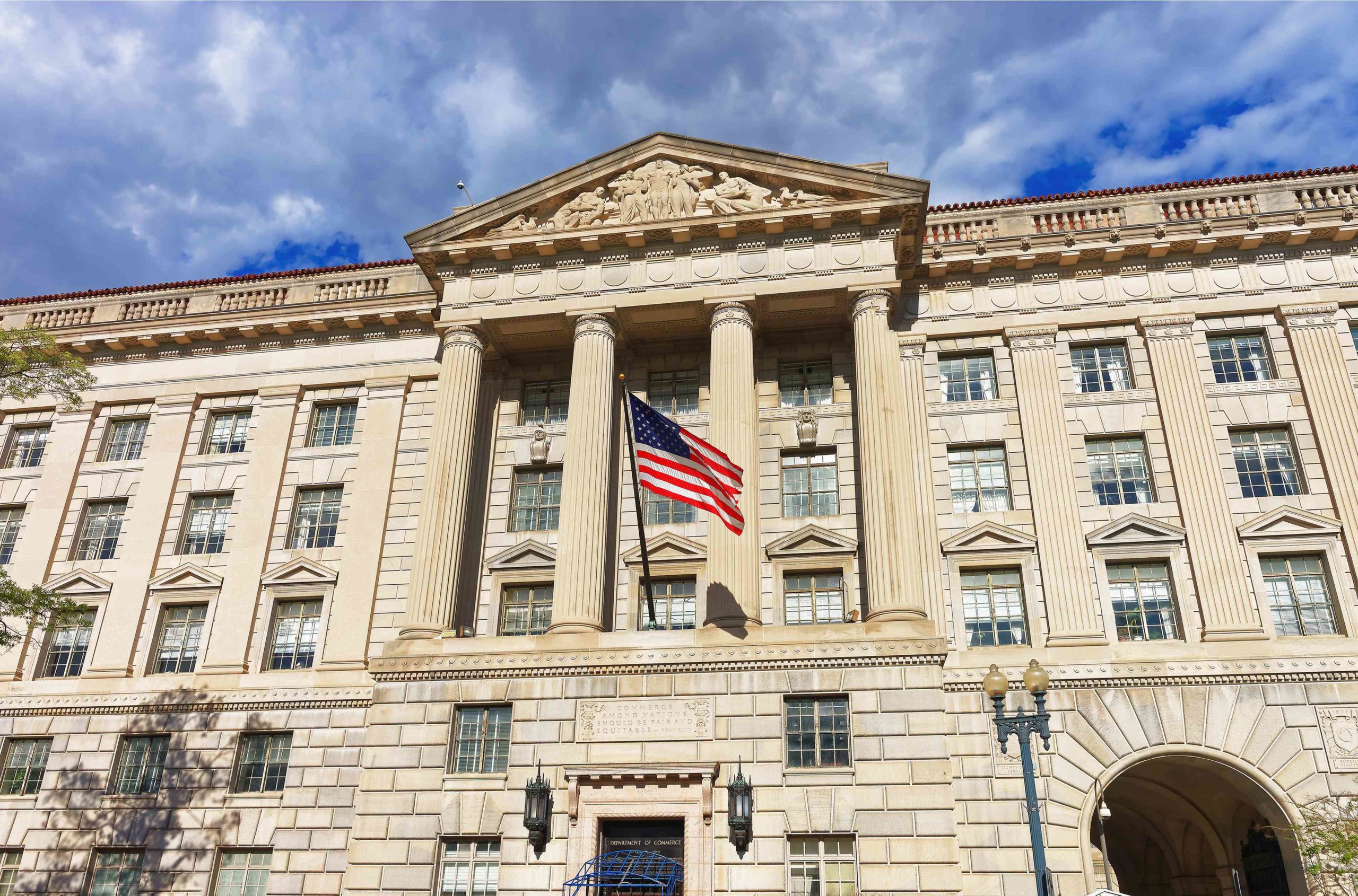
 The U.S. Department of Commerce’s Bureau of Industry and Security (“BIS”) recently published an Advanced Notice of Proposed Rulemaking (“ANPRM”) regarding the identification and review of controls for certain “foundational technologies.” This ANPRM represents another step toward implementation of the “emerging and foundational technology” provisions set forth in the Export Control Reform Act (“ECRA”) of
USTR, DOC, and Department of Agriculture Issue Plan to Investigate Foreign Imports of Certain Perishable Produce
 On September 1, 2020 the Office of the United States Trade Representative (USTR), Department of Agriculture, and Department of Commerce issued a 32-page report outlining the Trump Administration’s plan to address increased foreign imports of perishable fruits and vegetables. Following the public hearings held in August, the Administration published this report in hopes to open a dialogue with senior Mexican Government officials over the next 90 days regarding specific produce.
Commerce Initiates New Administrative Reviews on AD/CVD Orders
 On September 3, 2020, the U.S. Department of Commerce published a notice initiating new Administrative Reviews for antidumping duty (AD) and countervailing duty (CVD) orders with mostly July anniversary dates, but some other dates as well. Listed below are the countries and products named in the notice:
- Belgium: Citric Acid and Certain Citrate Salts (A-423-813)

August 2020 Trade Law Update
In Husch Blackwell’s August 2020 Trade Law Newsletter, you’ll learn about the following updates in international trade and supply chain law:
- Commerce proposed modifications to AD/CVD laws to strengthen enforcement
- EU lifted tariffs on U.S. lobsters; U.S. agreed to limited tariff rollback on certain products
- USTR revised list of EU imports subject to Section
Opportunity to Request Administrative Review
 On September 1, 2020, Commerce announced in the Federal Register the opportunity to request an annual administrative review for products that are currently subject to antidumping and countervailing duties. In addition to administrative reviews, Commerce has included an opportunity to request a new suspension agreement proceeding pertaining to fresh tomatoes from Mexico.
USTR Grants Extensions to Some Section 301 List 4 Product Exclusions, Allowing Most to Expire
 The Office of the U.S. Trade Representative (“USTR”) issued extensions for previously granted product exclusions under List 4 of the Section 301 tariffs on imports from China. USTR is extending the duty exemptions for only 87 of the approximately 248 product exclusions published to date under List 4, allowing for more than 150 to expire on September 1, 2020. The products for which exclusions have not been extended will be subject to the 7.5% tariff beginning on September 2, 2020.
EU Lifts Tariffs on U.S. Lobsters; U.S. Agrees to Limited Rollback on Certain Products
 On August 21, 2020, the United States Trade Representative Robert Lighthizer and European Union (EU) Commissioner Phil Hogan issued a joint statement, announcing that both parties would reduce tariffs on certain goods. Specifically, the EU has agreed to eliminate tariffs on imports of U.S. live and frozen lobster products. The elimination of these tariffs
USTR Announces New Section 301 Product Exclusions for List 3
 The Office of the U.S. Trade Representative (“USTR”) issued two (2) new product exclusions pertaining to the Section 301 List 3 tariffs. The current tariff is 25%. The new exclusions include 2 specific product descriptions that together cover 2 separate exclusion requests. According to the USTR, the product exclusions apply retroactively from September 24, 2018
U.S. Adds 38 New Huawei Affiliates to Entity List While Again Expanding Foreign-Produced Direct Product Rule
 The U.S. Department of Commerce’s Bureau of Industry and Security (“BIS”) has announced that it is further restricting access by Huawei Technologies Co. Ltd. and its designated non-U.S. affiliates (“Huawei”) to U.S.-produced technology and software. As we have previously discussed, BIS first added Huawei to its Entity List on May 15, 2019 and has continued to impose additional export restrictions on Huawei under the U.S. Export Administration Regulations (“EAR”). Most recently, BIS published a Federal Register notice to implement the following enhancements. Although BIS published this Federal Register notice on August 20, 2020, the following rule changes took effect retroactively as of August 17, 2020:
U.S. Seeks Snapback of U.N. Sanctions on Iran Despite Departure from Nuclear Deal
 The United States is formally demanding that the United Nations (U.N.) reimpose sanctions on Iran for its failure to meet commitments to limit its nuclear program set forth under the Joint Comprehensive Plan of Action (JCPOA). U.N. sanctions on Iran were lifted in 2015 as part of the terms of the JCPOA, which included the United States, European Union, France, Germany, the United Kingdom, Russia, and China as signatories. The U.S. formally withdrew from the JCPOA in 2018 and reinstated sanctions on Iran.