Supply Chain

Check out the latest episode of The Justice Insiders—a podcast hosted by Husch Blackwell partner Gregg Sofer—where we explore the intersection of international trade law and government investigations and enforcement, particularly in connection with Russia.

I previously appeared on Gregg’s podcast during the first quarter of 2022, and we pick up that

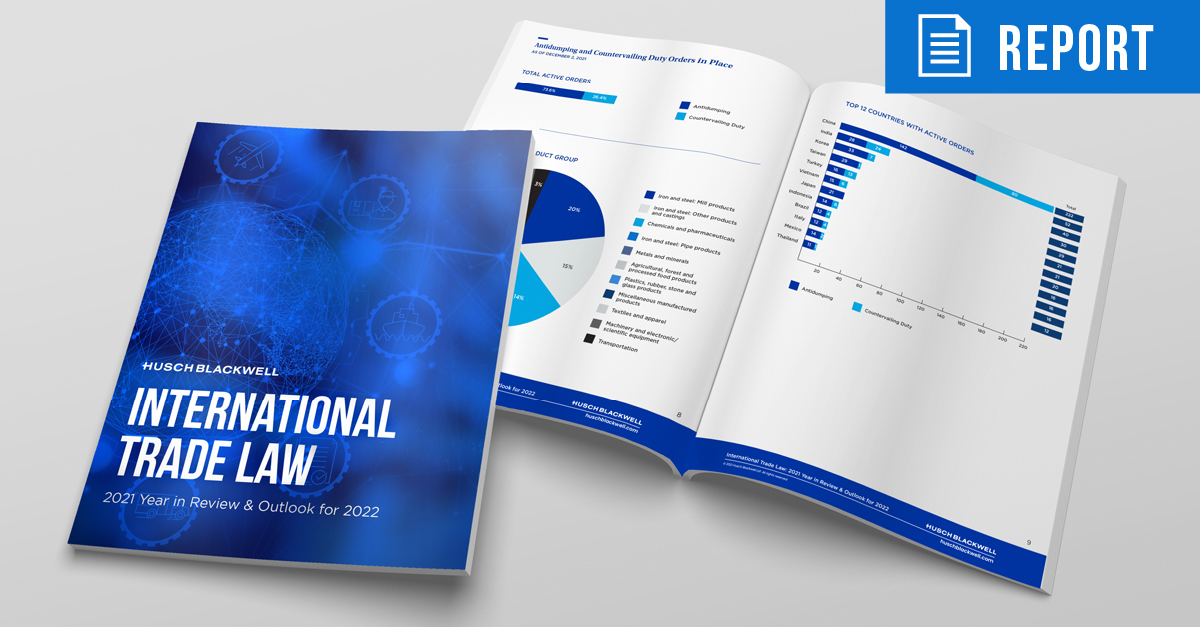
We are pleased to announce that our team’s fourth-annual international trade law year-in-review report was published just before the New Year. In it, we take a detailed look at how 2022 played out and explore how 2023 might develop. As companies continue to work through the challenges associated with supply chain dislocations, geopolitical turmoil, and

On June 13th, Customs and Border Protection (“CBP”) released its Operational Guidance For Importers to prepare companies for the Uyghur Forced Labor Prevention Act (“UFLPA”). UFLPA enforcement is set to take effect June 21st and will apply a rebuttable presumption standard to imports tied in whole or in part to the Xinjiang Uyghur Autonomous Region or entities identified by the U.S. government on the soon to be published UFLPA Entity List.

Some commercial truck traffic could be moving again at one border bridge as late this afternoon. On April 14, 2022, Texas Governor Greg Abbott announced an agreement with Nuevo León Governor Samuel Alejandro García Sepúlveda for heightened inspections on Mexico’s side of the border at the Columbia bridge and the lifting of increased security measures

Husch Blackwell’s third-annual international trade law year-in-review report provides a detailed look at how 2021 played out and takes a peek at how 2022 might develop. As companies begin to strategize on what a second year of the Biden administration will bring, we hope the framework presented in our report will help your business maximize potential cost savings and minimize potential risks as enforcement activity continues to rise and supply chains remain under pressure well into the coming year.

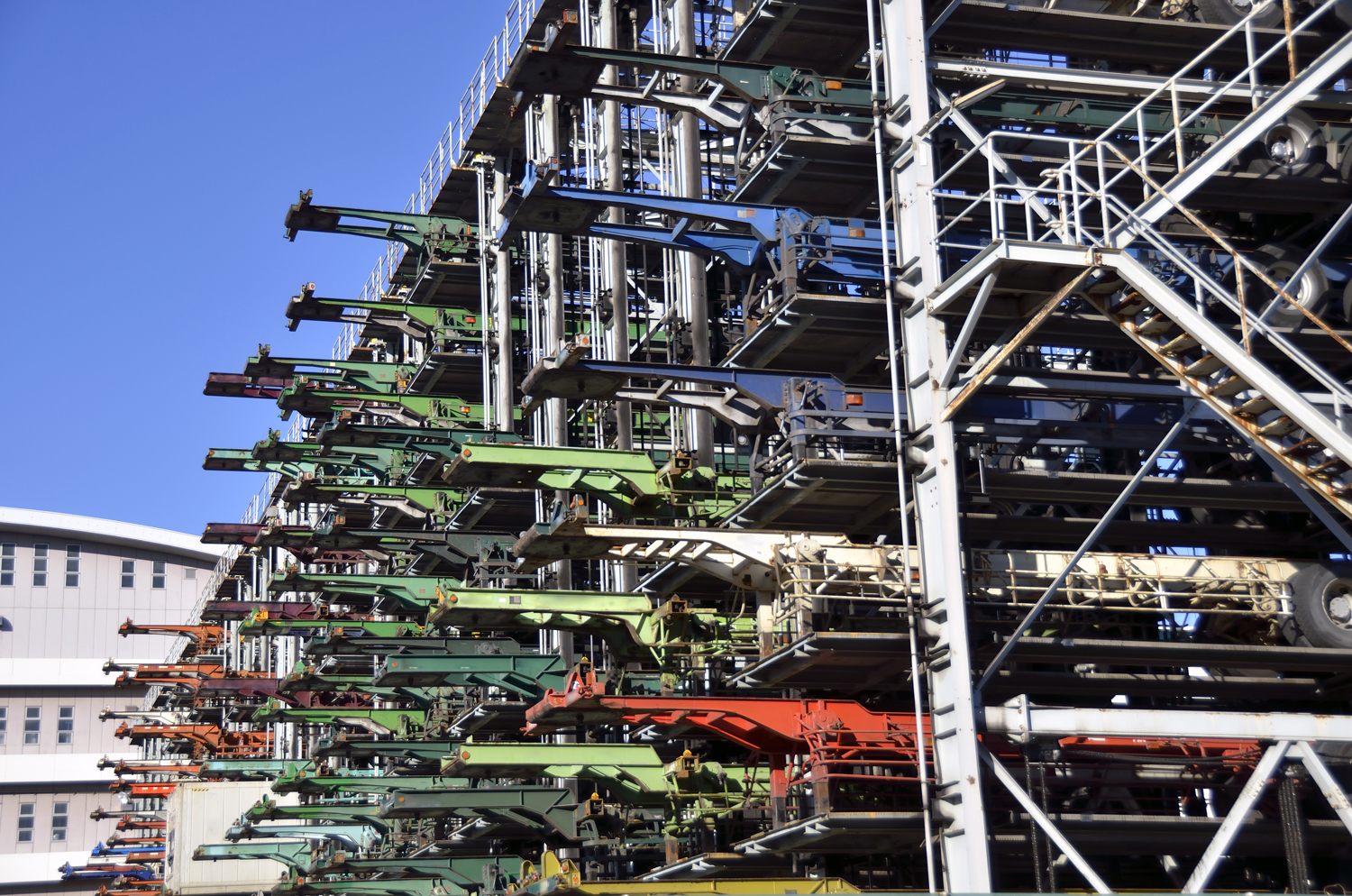
Don’t Forget the Chassis in the Chase for the Cure.

A new level of frustration has arisen from the ocean shipper ranks during this “post-COVID” period. Shipments from Asia to the U.S. are experiencing extreme difficulties in getting their cargo delivered, mainly due to the acute shortage of chassis to effect delivery of their containers on the U.S. side. The painful example of this is the BNSF current experience with Lot W. Aside from the impact to the importer in not being able to access its cargo and experiencing serious damage to its business, it is also likely to face serious demurrage charges from the ocean carrier. This is on top of having just experienced a quadrupling (or more) of the base FAK per container rates, and the ocean carrier choices to leave agricultural commodities sitting at West Coast U.S. ports, favoring the shipment of empty containers opting to position equipment for the lucrative Asia to U.S. trade.

What might not be so obvious in this COVID-19 environment, which we have grown to associate with shortages, is that counterintuitively there are issues beginning to appear dealing with the opposite situation. The Journal of Commerce has reported that “[t]he container shipping industry is marshaling a response to signs of a building import backlog as some retailers and manufacturers fail to pick up containers because warehouses are full or closed due to not being deemed essential service providers responding to coronavirus disease 2019 (COVID-19).” This is a development with implications to all stakeholders in the supply chain and will have some impact on retailers/manufacturers, ocean carriers, ocean transportation intermediaries, and warehouses.

The authors previously reported that on or about February 27, 2019, the Ministry of Transport (“MOT”), PRC dropped formal application approval procedures and insurance (in the U.S., the China bond) requirements for all NVOCCs, including U.S. NVOCCs. While the MOT dropped the tedious application requirements and insurance (and bond) requirements for NVOCC registration, it still

Ironically, during the current China/U.S. tariff turmoil, the Ministry of Transport (MOT), Peoples Republic of China’s (PRC’s) is leading the deregulatory trend in ocean shipping as applicable to Non-vessel Operating Common Carriers (“NVOCCs”). The MOT has quietly deregulated burdensome registration application procedures for Non-vessel Operating Common Carriers (“NVOCCs”) from on or about February 27, 2019. The MOT has dropped formal application registration and insurance requirements for all NVOCCs, including U.S. NVOCCs. It is our understanding that as of now the prior registration certificates issued by MOT have no regulatory function or value. Currently, the requirements for registering NVOCCs has been substantially simplified as noted below. Until now, without the aforementioned Certificate U.S. NVOCCs could not issue their house bills in the U.S./China trade lanes without risk of substantial sanctions and penalties. However, also note that the NVOCC requirement by the Shanghai Exchange for filing rate ranges remains in place.

On September 22, 2018, Bill (SB-1402) was signed into law in California to become effective January 1, 2019. That law makes “Customers” (generally shippers, exporters, importers, and ocean intermediaries, FMCSA Property Brokers)  that engage or use “a port drayage motor carrier” jointly and severally liable with that port drayage motor carrier if that carrier is listed on the Internet Web site maintained by the California Division of Labor Standards Enforcement. This ominous list now identifies port drayage motor carriers which have been found liable to a “port drayage driver” for unsatisfied court judgments, assessments, orders, decisions, or awards, for port drayage services performed for which the drivers have not been paid or expenses for which they have not been reimbursed, plus damages, penalties, and interest. The California Labor Commissioner’s Office, Division of Labor Standards Enforcement, has awarded in excess of $45 million in unlawful deductions from wages and out-of-pocket expenses to more than 400 drivers, and the California Labor Commissioner’s Office noted that drivers have seen little of those awards.